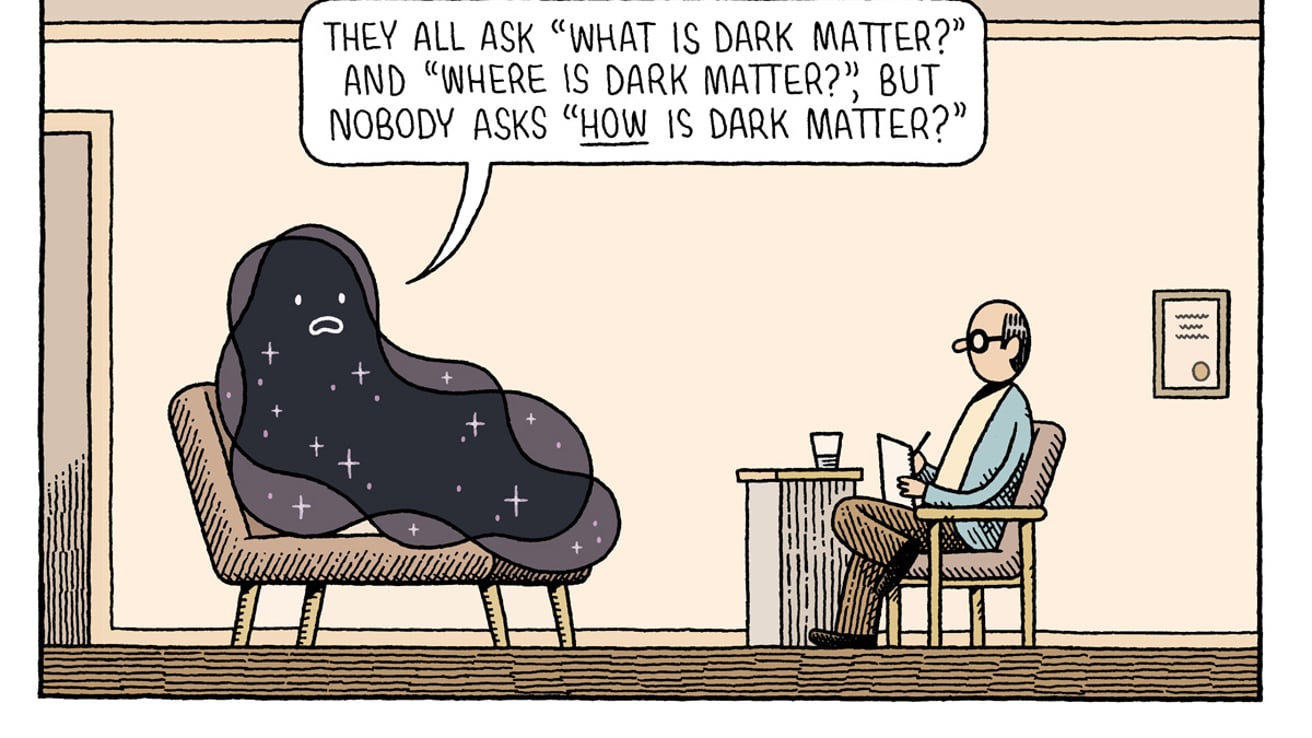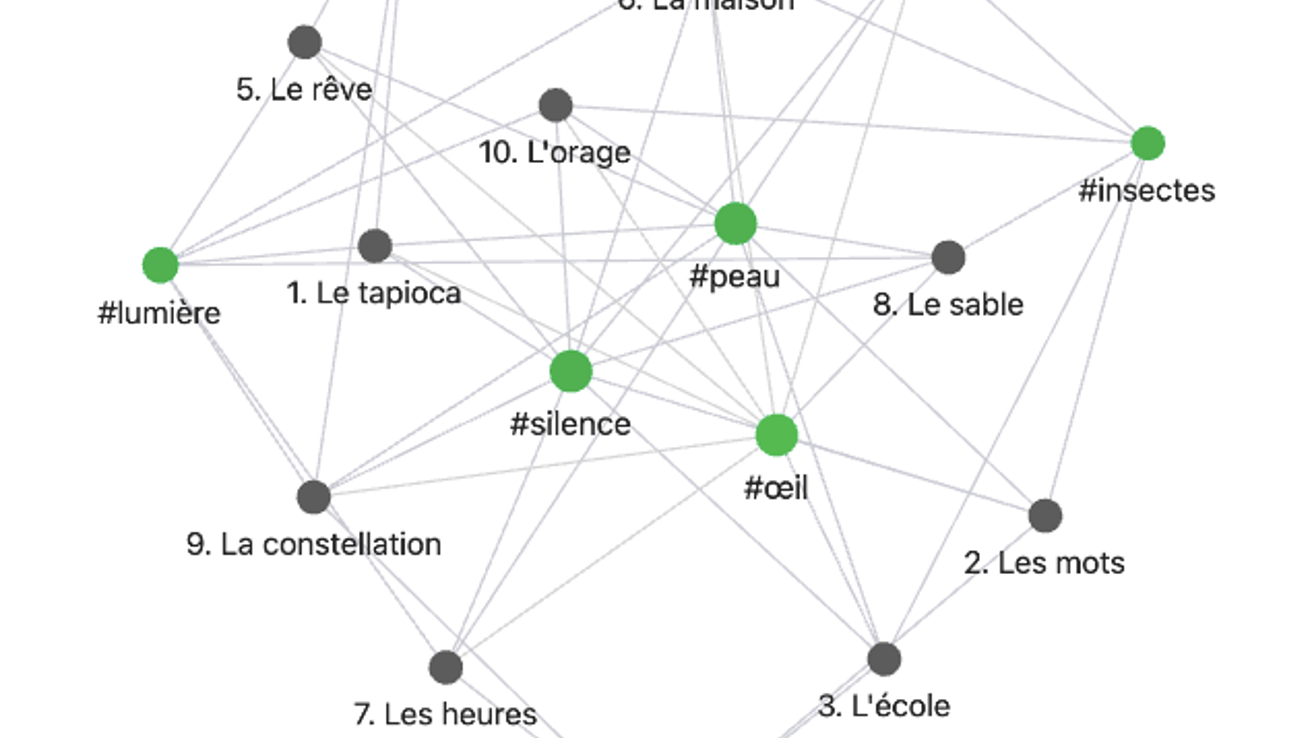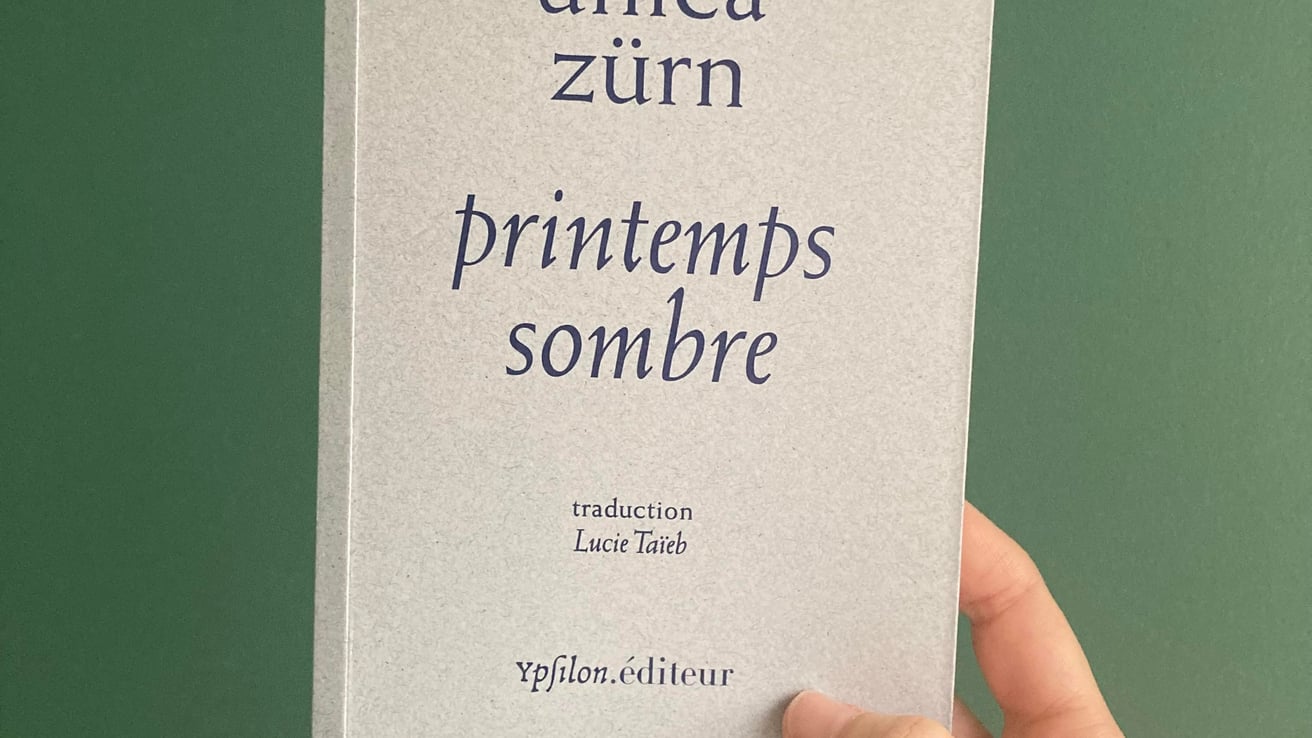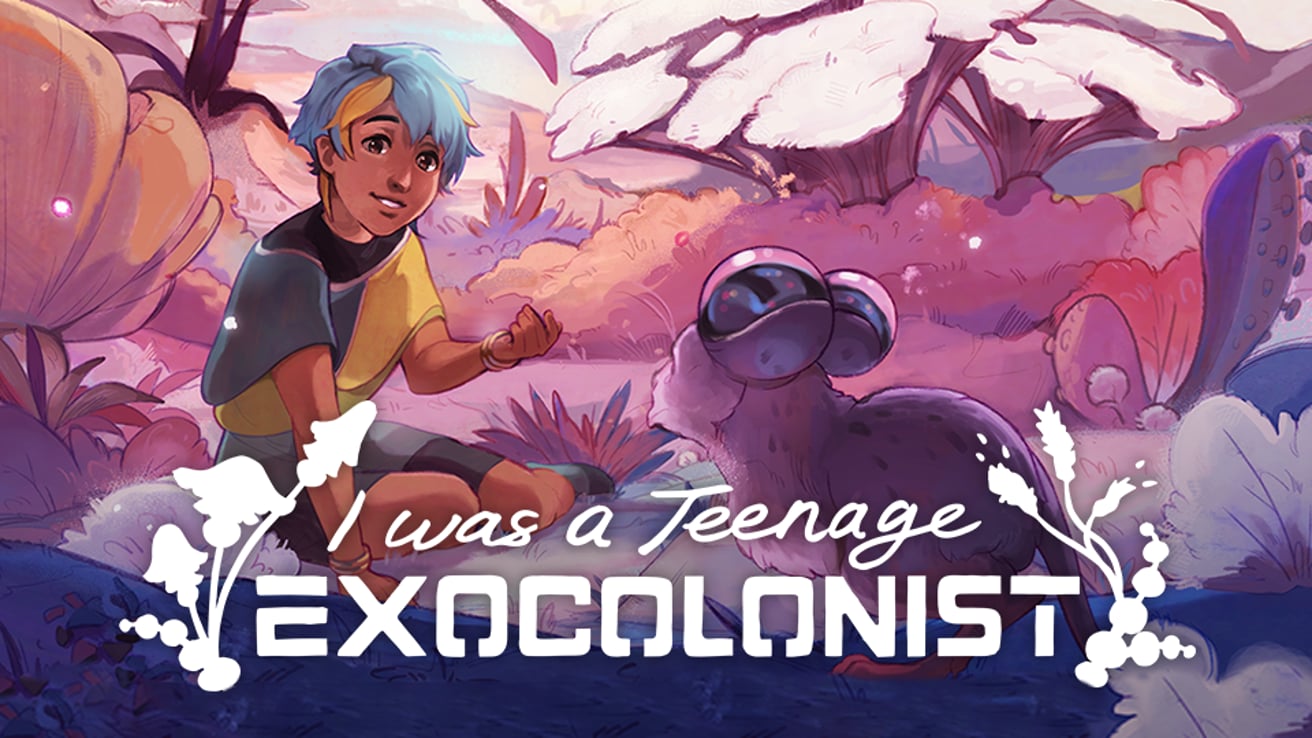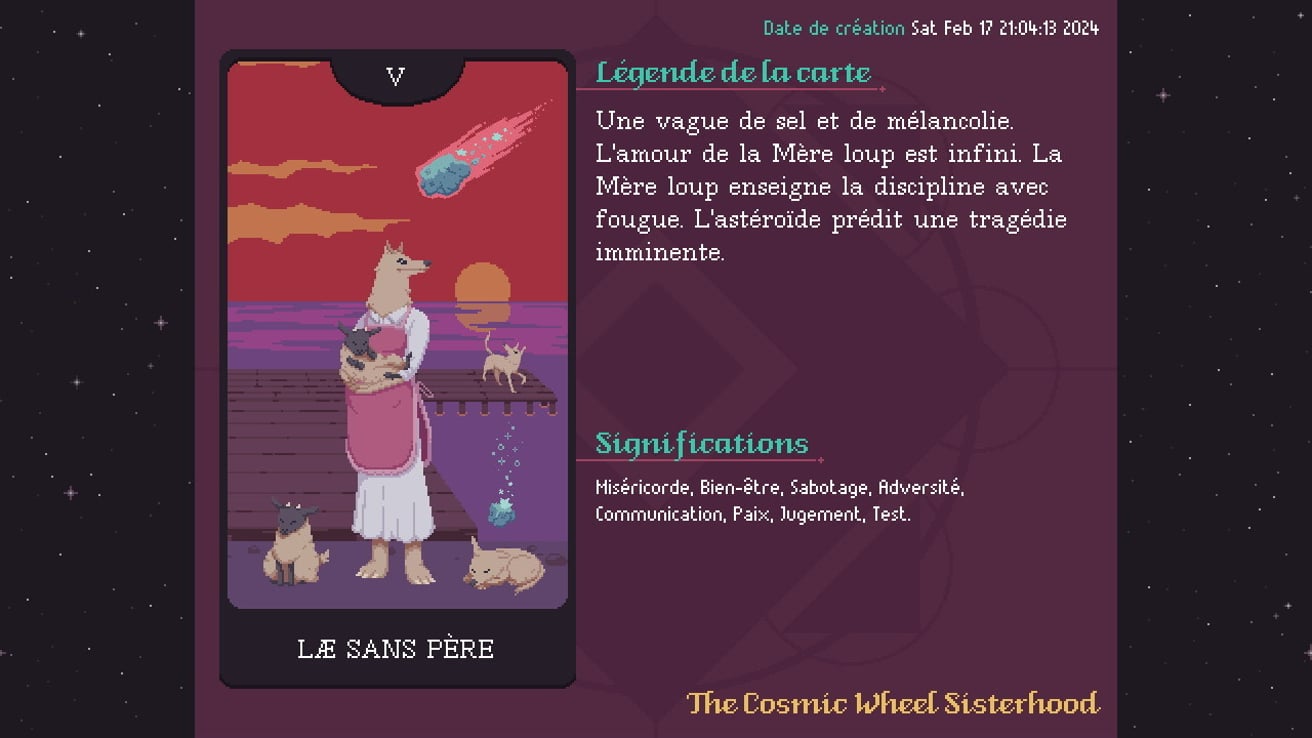

J’ai beaucoup aimé ce petit jeu-promenade créé par GingerBread et inspiré de la théorie de la Fiction-Panier ou Carrier Bag Theory of Fiction d'Ursula Le Guin.

Après l’avoir terminé je suis retournée lire ce texte, si simple et si puissant :
Where is that wonderful, big, long, hard thing, a bone, I believe, that the Ape Man first bashed somebody in the movie and then, grunting with ecstasy at having achieved the first proper murder, flung up into the sky, and whirling there it became a space ship thrusting its way into the cosmos to fertilize it and produce at the end of the movie a lovely fetus, a boy of course, drifting around the Milky Way without (oddly enough) any womb, any matrix at all? I don’t know. I don’t even care. I’m not telling that story. We’ve heard it, we’ve all heard about all the sticks and spears and swords, the things to bash and poke and hit with, the long, hard things, but we have not heard about the thing to put things in, the container for the thing contained. That is a new story. That is news.
[…]
If it is a human thing to do to put something you want, because it’s useful, edible, or beautiful, into a bag, or a basket, or a bit of rolled bark or leaf, or a net woven of your own hair, or what have you, and then take it home with you, home being another, larger kind of pouch or bag, a container for people, and then later on you take it out and eat it or share it or store it up for winter in a solider container or put it in the medicine bundle or the shrine or the museum, the holy place, the area that contains what is sacred, and then next day you probably do much the same again — if to do that is human, if that’s what it takes, then I am a human being after all. Fully, freely, gladly, for the first time.
*
Sur Cohost, un petit réseau social à mi-chemin entre Twitter et Tumblr, géré par trois (3) personnes, j’ai été intéressée par les textes de Shel, et notamment celui-ci Abuser is Not a Class (AKA "My Least Favorite Word"), qui critique l’usage du terme.
Another thing I hate about the word “abuser” is the terming of “my abuser.” […] By calling them “my abuser” I had an ownership of them, a permanent relationship between us, of abuser and abusee, even after years of never speaking to each other or even living in the same place.
[…]
When you are living separately, no longer fleeing them, no longer having to defend yourself, then “my abuser” only grips the blade into your flesh.
I know that immediately removing the blade from your chest may kill you, but so will leaving it in forever. Eventually, you have to carefully, surgically, strategically, remove the blade and allow the doctors to give you stitches. You have to allow the stitches to dissolve in the hot water. You have to allow the scar to fade as decades come and go and the cells of your skin die and replace themselves. No, it may never fade completely, but gripping the hilt of the knife in your chest and saying “this is my knife” does not give you power over the knife.
*
CBT [cognitive behavioural therapy] embodies a very specific view of painful emotions: that they’re primarily something to be eliminated, or failing that, made tolerable. A condition such as depression, then, is a bit like a cancerous tumour: sure, it might be useful to figure out where it came from – but it’s far more important to get rid of it. CBT doesn’t exactly claim that happiness is easy, but it does imply that it’s relatively simple: your distress is caused by your irrational beliefs, and it’s within your power to seize hold of those beliefs and change them.
Psychoanalysts contend that things are much more complicated. For one thing, psychological pain needs first not to be eliminated, but understood. From this perspective, depression is less like a tumour and more like a stabbing pain in your abdomen: it’s telling you something, and you need to find out what. (No responsible GP would just pump you with painkillers and send you home.)
J’ai récemment retrouvé cette note, conservée depuis 2016. Cet article du Guardian revient sur les critiques faites à la psychanalyse concernant son efficacité, particulièrement populaires depuis que les thérapies cognitivo-comportementales se sont proclamées comme les seules “evidence-based” ou “fondées sur les preuves” une affirmation avec laquelle je ne suis pas d’accord et qui nécessiterait pour clarifier cette position une digression à propos de l’épistémologie à laquelle on se réfère mais : ce serait trop long, j’en conseille la lecture si le sujet vous intéresse, même si c’est très anglo-centré. Il se termine sur ce qui me semble être le plus crucial lorsque l’on parle de psychothérapie :
“There was a wonderful British analyst, Michael Balint, who was very involved in medical training, and he had a question he liked to pose [to doctors],” Pollens said. “It was: ‘What do you think is the most powerful medication you prescribe?’ And people would try to answer that, and then eventually he’d say: ‘the relationship’.”
*
Cet été j’ai lu Dracula de Bram Stoker dans l’ordre chronologique des missives, grâce à Dracula Daily. C’était très chouette, même si je m’attendais à quelque chose de plus spectaculaire à la fin, tant la tension monte tout au long de la traque finale.
Et puis j’ai découvert, via Matt Kirkland, l’existence de l’application Serial Reader, grâce à laquelle on peut lire des romans classiques – donc libres de droit – en anglais, par petits morceaux, envoyés chaque jour à heure fixe.
Je reçois donc depuis quelques jours, à 8h le matin, Frankenstein or The Modern Prometheus de Mary Shelley, que je lis dans le métro. Et auparavant Kwaidan: Stories and Studies of Strange Things, un recueil d’histoires de fantômes japonaises traduites et adaptées par Lafcadio Hearn, sans héros valeureux, sans dénouement lyrique, souvent cruelles.
Dans l’un de ces contes, un homme qui a commis un crime et doit être exécuté plaide la stupidité pour sauver sa peau et menace son bourreau de venir le hanter après sa mort. Le samouraï lui répond :
“We shall allow you to frighten us as much as you please – after you are dead. But it is difficult to believe that you mean what you say. Will you try to give us some sign of your great resentment – after your head has been cut off?”
“Assuredly I will,” answered the man.
“Very well,” said the samurai, drawing his long sword; – “I am now going to cut off your head. Directly in front of you there is a stepping-stone. After your head has been cut off, try to bite the stepping stone. If your angry ghost can help you to do that, some of us may be frightened… Will you try to bite the stone?”
“I will bite it!” cried the man, in great anger, – “I will bite it! –I will bite”–
There was a flash, a swish, a crunching thud: the bound body bowed over the rice sacks, – two long blood-jets pumping from the shorn neck; – and the head rolled upon the sand. Heavily toward the stepping-stone it rolled: then, suddenly bounding, it caught the upper edge of the stone between its teeth, clung desperately for a moment, and dropped inert.
Devant le spectacle terrible de cette tête coupée qui mord de toutes ses forces une pierre, toutes les personnes présentes lors de l’exécution vivent dans la peur que le fantôme vengeur ait dit vrai et ne vienne les persécuter ; sauf le samouraï qui reste tout à fait serein. Le récit se termine ainsi :
“I understand that the desire of a dying man for revenge may be a cause for fear. But in this case there is nothing to fear. […] Only the very last intention of the fellow could have been dangerous; and when I challenged him to give me the sign, I diverted his mind from the desire of revenge. He died with the set purpose of biting the stepping-stone; and that purpose he was able to accomplish, but nothing else. All the rest he must have forgotten. So you need not feel any further anxiety about the matter.”
And indeed the dead man gave no more trouble. Nothing at all happened.
*
Message d’intérêt public de niche : j’ai créé une newsletter parente aux cailloux pour parler plus spécifiquement de psychologie clinique.
J’ai l’habitude de faire des résumés de mes lectures pour mieux m’en rappeler et j’avais envie de les partager. Cependant, c’est souvent un peu long pour le format des cailloux, qui, rappelons-le, sont des fragments cohérents qui ne sont pas assez volumineux pour être appelés blocs et qui ont une forme plus ou moins arrondie, et cela méritait, il me semble, d’avoir son propre espace.
Une à deux fois par mois donc, j’enverrai un coquillage parmi tant d’autres trouvés sur les rivages de la relation thérapeutique : un résumé de ma dernière lecture en psychologie clinique – souvent d'orientation psychanalytique – sur la pédiatrie, les relations précoces, le deuil et plein d'autres choses encore.
J’essaie de jargonner le moins possible, d’expliquer les concepts qui pourraient être obscurs ; cette newsletter ne s’adresse pas particulièrement aux professionnel·les mais vise à partager le sens et les enjeux de la clinique, au fil de mes lectures.
coquillages
Des lectures en psychologie clinique sur l'enfance, la vie, la mort
Pour le moment, vous y trouverez le résumé de l’article sur le syndrome de glissement que j’ai co-écrit et déjà présenté recemment dans les cailloux, mais très prochainement j’enverrai un texte sur l’injonction à “libérer la parole” et le concept de solitude traumatique chez Ferenczi, le résumé d’un ouvrage sur le travail des psys en service de réa néonatale et une introduction à la question des soins palliatifs…